Getting bass right is not about buying the biggest subwoofer or the most powerful amp. Most problems people face come from wiring things the wrong way. The best way to connect amplifier to subwoofer is what decides if your system sounds tight and punchy or muddy and weak. I see this mistake a lot in home audio, car audio, and even small 2.1 desktop setups.
In this guide, you’ll learn the correct way to connect amplifier to subwoofer step by step, without confusing tech talk. This is especially useful if you are still choosing gear or already using compact amps like Fosi Audio amplifiers, which are popular for 2.1 and small home audio setups.
Why the Correct Way to Connect Amplifier to Subwoofer Matters
When you follow the correct way to connect amplifier to subwoofer, the most obvious benefit is cleaner and more controlled bass. Low frequencies sound tighter and blend more naturally with the main speakers, instead of feeling loose, boomy, or detached from the music. This is especially important in a vinyl turntable audio setup, where clarity and balance matter more than sheer bass output.
Proper wiring and careful tuning also reduce strain on both the amplifier and the subwoofer. This helps prevent overheating, distortion, and long-term wear, which is useful during longer listening sessions or when playing bass-heavy records at steady volume.
Another key benefit is better balance across your entire system. When gain and crossover are set correctly, the subwoofer supports the music without drawing attention to itself. Vocals stay clear, mids remain detailed, and the bass feels like it belongs in the mix rather than sitting on top of it.
A correctly connected subwoofer also gives you more flexibility when fine-tuning. Small changes to crossover settings or placement become easier to hear, making the tuning process more rewarding and helping you dial in a sound that fits your room and listening style.
Active vs Passive Subwoofer Basics
Before touching any cables, it is important to know what type of subwoofer you are working with. An active subwoofer comes with a built-in amplifier, so it only needs a signal input from your amplifier or receiver and power from the wall. This type is common in home audio and 2.1 speaker setups because it keeps wiring simple and controlled.
A passive subwoofer, on the other hand, has no amplifier inside. It relies fully on an external amplifier to provide power, which means wiring, impedance, and amp matching all matter more. Passive subs are often seen in car audio systems and DIY home builds.
The best way to connect amplifier to subwoofer depends heavily on this difference. Mixing up active and passive connections is one of the most common beginner mistakes and can lead to poor sound or damaged equipment.
Connect Amplifier to Subwoofer (Active Subwoofer)

If your amplifier or receiver has a SUB OUT or LFE OUT, this is the cleanest option. Use a single RCA cable from the amp’s sub out and connect it to the subwoofer’s LFE input. If the subwoofer has a dedicated input labeled LFE or LFE In, use that one. In this case, it does not matter whether the cable is labeled left or right, because the signal is summed internally by the subwoofer. When using the LFE input, it is also best to bypass the subwoofer’s internal crossover if that option is available, letting the amplifier handle bass management.
If the subwoofer does not have a clearly labeled LFE input and instead offers Left (L) and Right (R) RCA inputs, use the Left input, which is often marked as L / Mono. This input is designed to accept a single summed signal and works correctly with one RCA cable from the amplifier.

If your amplifier does not have a sub out, many active subwoofers support speaker-level input. In this case, run speaker wires from the amplifier’s left and right speaker terminals into the matching left and right inputs on the subwoofer. The subwoofer extracts the bass internally while your main speakers continue to handle mids and highs.
This approach is still part of the how to connect amplifier to subwoofer when a dedicated sub out is not available, and it works well for simple 2.1 and stereo home audio setups.
Bypass The Subwoofer Internal Crossover
When using the LFE input, you should bypass the subwoofer’s internal crossover so the amplifier or receiver controls bass management. Many subwoofers include a crossover bypass switch or an LFE mode setting, which disables the low-pass filter automatically. If there is no dedicated switch, turn the crossover knob all the way to its highest setting. This effectively removes the subwoofer’s crossover from the signal path and prevents double filtering, which can make bass sound uneven or muddy.
Amplifier Has No Crossover
If your amplifier does not have its own crossover control, then the subwoofer should handle bass management instead. In this case, do not bypass the crossover. Set the subwoofer’s low-pass filter manually, starting around 70–80Hz, and fine-tune from there so the bass blends smoothly with your speakers.
Amplifier to Subwoofer (Passive Subwoofer)
Passive subwoofers are common in car audio and DIY home setups.
Here, the correct way to connect amplifier to subwoofer starts with impedance matching. Always check the subwoofer’s ohm rating and make sure your amplifier can handle it. Wiring a low-ohm sub to an amp not designed for it can cause heat issues or shutdowns.
Connect the subwoofer directly to the amplifier’s speaker output using proper gauge speaker wire. Thicker wire helps when running higher power or longer cable lengths.
If your subwoofer has dual voice coils, wire them based on your amplifier’s safe load. This single step often decides whether your system runs smoothly or struggles.
Using the Right Crossover Settings
Even if the wiring is perfect, poor crossover settings can easily undo all your hard work. The crossover decides where your speakers stop and where the subwoofer takes over, so getting this wrong often leads to muddy or disconnected bass.
The correct way to connect amplifier to subwoofer always includes setting a proper low-pass filter. For most home audio setups, a starting point around 70–80Hz works well. This range keeps vocals and midrange details out of the subwoofer, letting it focus on low frequencies where it performs best.
If you are using smaller bookshelf speakers, a slightly higher crossover can help them sound cleaner and more relaxed. These small adjustments are part of the tips for connecting an amplifier and subwoofer for optimal sound and can make the bass feel natural and well blended rather than forced.
Gain Is Not Volume
This is one of the most misunderstood parts of any subwoofer setup, and it often leads to boomy or tiring bass.
Many people turn the subwoofer gain all the way up and expect better bass, but gain is not a volume control. It is used to match the signal level between the amplifier and the subwoofer so both work together smoothly.
Connecting an amplifier to subwoofer includes setting proper amplifier and subwoofer gain settings. Start with the gain set low, then play music at your usual listening volume. Slowly increase the gain until the bass blends naturally with your speakers. If the low end starts to sound bloated, harsh, or distorted, back it down slightly and fine-tune from there.
Common Wiring Mistakes to Avoid
One mistake I often see is sending speaker-level power into an active subwoofer’s output or line-level input by accident. This can easily damage the subwoofer’s internal amplifier and is an expensive mistake to fix. Always double-check whether the input is meant for speaker-level or RCA connections before powering everything on.
Another common issue is reversed polarity. Make sure positive goes to positive and negative goes to negative on both the amplifier and the subwoofer. When polarity is wrong, bass can cancel itself out, making it sound weak, thin, and disconnected from the rest of the system.
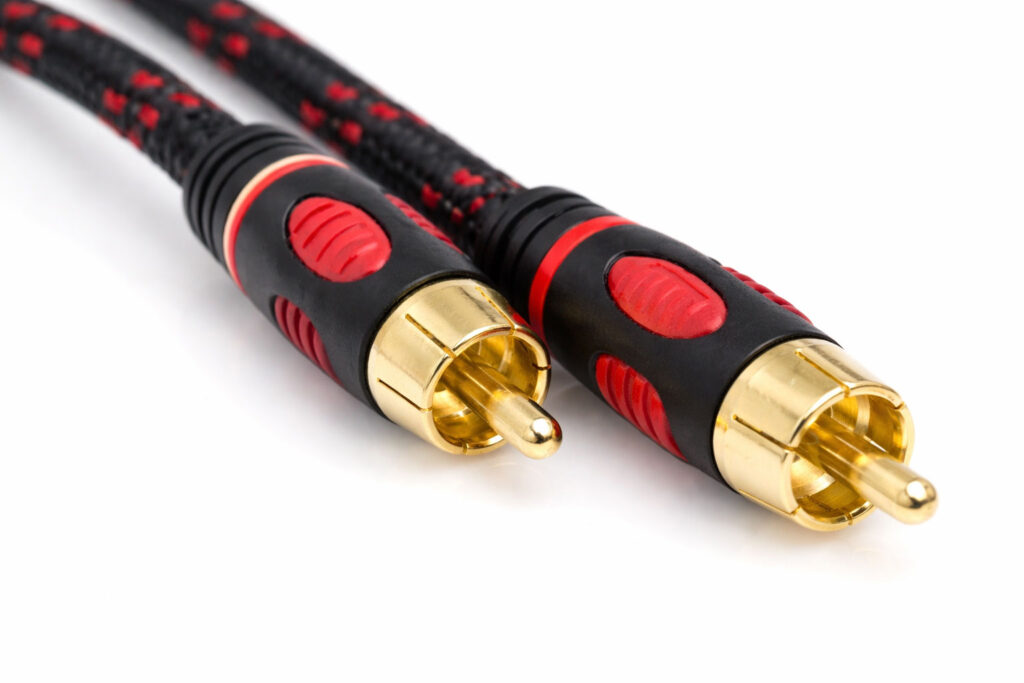
Using cheap or poorly shielded RCA cables is another problem that shows up often. Subwoofer signals are sensitive, and low-quality cables can introduce hum or noise that becomes very obvious during quiet scenes or low bass notes. Once you hear bass hum, it is hard to ignore, so decent cables are always worth it.
Choosing the Right Subwoofer Cables

- Professional audio quality RCA cables for premium left/right audio signal transfer from your home stereo, audio receiver, DVD or Bluray player,works on all types of digital coaxial/rca audio ports.
- 24K gold-plated connector, copper clad center conductor, Dielectric insulation, nylon braid and dual shielding, for natural sounds. Low energy loss and maximum rejection of the hum/static from RF and EM interference.


- IN THE BOX: (1) Amazon Basics 35-foot subwoofer audio cable for connecting a subwoofer speaker to a stereo receiver, sound system, or other compatible audio device
- DEVICE COMPATIBILITY: Works with RCA ports, S/PDIF, digital & composite video interfaces; designed for use with subwoofers & Amazon audio products
Subwoofer signals are sensitive, so cable quality matters more than many people expect. Poorly shielded or loose RCA cables can introduce hum or noise that becomes very obvious during quiet scenes or deep bass passages.
For most home audio setups, a well-shielded RCA subwoofer cable with snug connectors is enough. If you want a deeper breakdown of what to look for, including real-world options, check out our guide on best subwoofer cables. Longer cable runs benefit from better shielding to keep the signal clean, especially when the subwoofer is placed far from the amplifier.
For speaker-level connections, clear polarity markings on the wire help avoid wiring mistakes and make setup easier. Using decent cables will not change the character of your bass, but it helps ensure your subwoofer performs cleanly and reliably.
Home Audio vs Car Audio Differences

In car audio, the proper way to connect amplifier to subwoofer usually involves mono amplifiers, bridged channels, and very specific ohm loads. Space is limited, power is drawn from the vehicle, and subwoofers are often pushed harder to fill the cabin. Because of this, wiring quality and impedance matching are critical to keep the amplifier stable and avoid shutdowns or distortion.
Home audio works a little differently. Most setups rely on line-level signals from a sub out or LFE output, along with built-in crossovers inside the amplifier or the subwoofer itself. Power demands are more relaxed, and the focus shifts toward clean signal flow and smooth bass integration with the main speakers. This becomes even more important if you plan to build a Dolby Atmos home theatre, where the subwoofer needs to blend seamlessly with center, surround, and height channels.
Even with these differences, the core idea stays the same. A clean signal, safe power delivery, and correct impedance are what make bass sound controlled and natural, no matter where the system is used.
Testing Your Setup After Connection
Once everything is connected, play familiar tracks with steady, well-recorded bass. Choose music you know well and sit at your normal listening position, not right next to the subwoofer. Focus on overall balance, not just how hard the bass hits. Good bass should support the track, not pull your attention away from vocals or instruments.
If you are using compact Class D amps like the Fosi Audio BT20A Max, pay extra attention to how the sub blends with your speakers at moderate volume. These amps can deliver strong output, but proper tuning makes a bigger difference than raw power.
The correct way to connect amplifier to subwoofer should give you bass that feels like it belongs to the music, not something that switches on and off with every beat. If the sub sounds slow, boomy, or overpowering, go back and fine-tune gain and crossover settings. Small adjustments often make a big difference, especially in smaller rooms or desktop setups.
Subwoofer Placement Tips for Better Bass

Even with perfect wiring and tuning, poor subwoofer placement can hold your system back. Where you place the subwoofer affects how bass travels through the room, how strong it feels, and how evenly it is distributed at your listening position.
A common starting point is placing the subwoofer near the front speakers, slightly off to one side rather than directly centered. Corners can increase bass output, but they may also make low frequencies sound boomy or uneven. If the bass feels overpowering in some notes and weak in others, placement is often the reason.
One simple way to improve results is to experiment before locking in a final spot. Move the subwoofer a short distance at a time and listen for smoother, more consistent bass. The goal is to make the low end blend naturally, so it feels like it is coming from the speakers themselves rather than a separate box in the room.
Subwoofer placement works hand in hand with gain and crossover settings. Once you find a good position, go back and fine-tune your settings again. Small changes in placement can make tuning easier and help the bass sound more natural and controlled.
FAQ: How to Connect Amplifier to Subwoofer
Do I need a special cable to connect an amplifier to a subwoofer?
For active subwoofers, a standard RCA cable is enough. Passive subwoofers need proper speaker wire.
Can I connect a subwoofer directly to speaker terminals?
Yes, if the subwoofer supports speaker-level input. This is common when the amp has no sub out.
Why does my subwoofer sound weak after connection?
Check polarity, gain, and crossover settings. One small mismatch can cancel out bass.
It is safe only if the subwoofer’s impedance matches the amplifier’s bridged rating.
Check polarity, gain, and crossover settings. One small mismatch can cancel out bass.
Should I set crossover on the amp or the subwoofer?
Use one, not both. Pick the better control and disable the other to avoid overlap.
Final Thoughts on Getting Bass Right
The best way to connect amplifier to subwoofer is simple once you understand the basics, but dialing it in does take time. Start with proper wiring and correct input selection, as this sets a solid foundation for the rest of the setup.
From there, careful tuning over a few listening sessions allows the system to settle into your room and match your listening habits. Even a small subwoofer can sound solid and controlled when it is set up with patience rather than rushed adjustments.
Take your time with the setup and fine-tune the bass by balancing it so it blends naturally, almost as if the low end is coming from the speakers themselves. Small changes to gain and crossover can make a noticeable difference, so trust your ears and adjust gradually. When everything is dialed in, the bass supports the music smoothly instead of overpowering it.