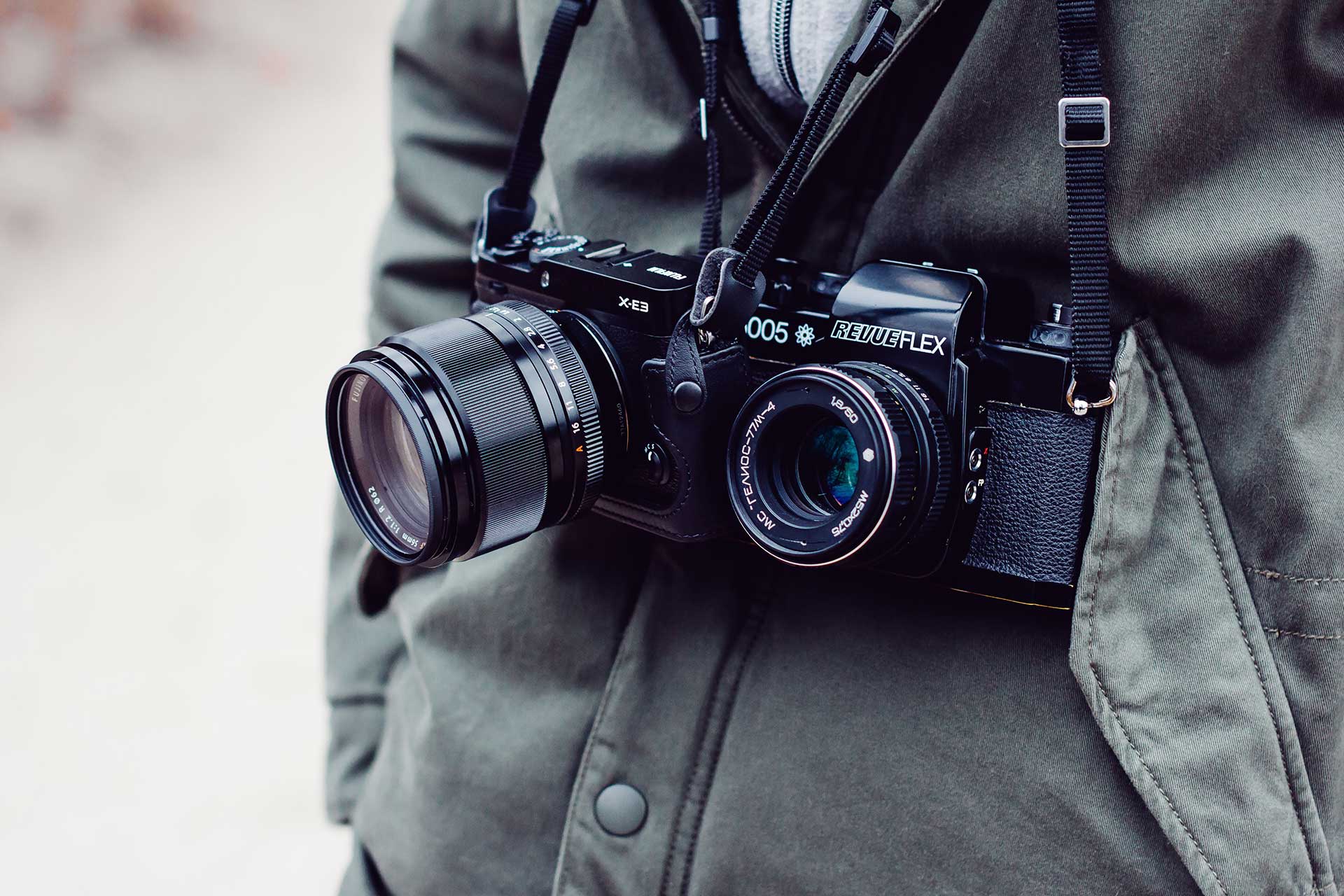
Street photography is easier to enjoy when your camera kit feels like a natural part of your day. A compact camera, one comfortable lens, a spare battery, and a few simple accessories can be enough for hours of walking and shooting. You do not need a backpack full of equipment to make strong photographs.
The challenge is knowing what to buy first. Should you choose a pocketable digital camera, a mirrorless system, or a 35mm film camera? Is a 28mm, 35mm, or 50mm lens the better fit? And which accessories are worth carrying when you are out on the streets?
This street photography gear guide focuses on the equipment that makes a real difference: cameras, lenses, film essentials, a practical everyday bag, and a few optional tools. It also includes three sample kits and budget advice to help you build a setup without buying everything at once.
The aim of this street photography gear guide is simple: choose reliable gear that suits the way you photograph, then spend more time making pictures than shopping for accessories.
1. Street Photography Gear Guide: Choose a Camera You Will Carry

When choosing equipment, start with a camera you will enjoy carrying. For street photography, portability and handling often matter more than headline specifications. A camera should be comfortable to carry, quick to switch on, and easy to operate without drawing too much attention. Autofocus, battery life, viewfinder design, and the availability of small lenses are also worth considering.
Compact Digital Cameras
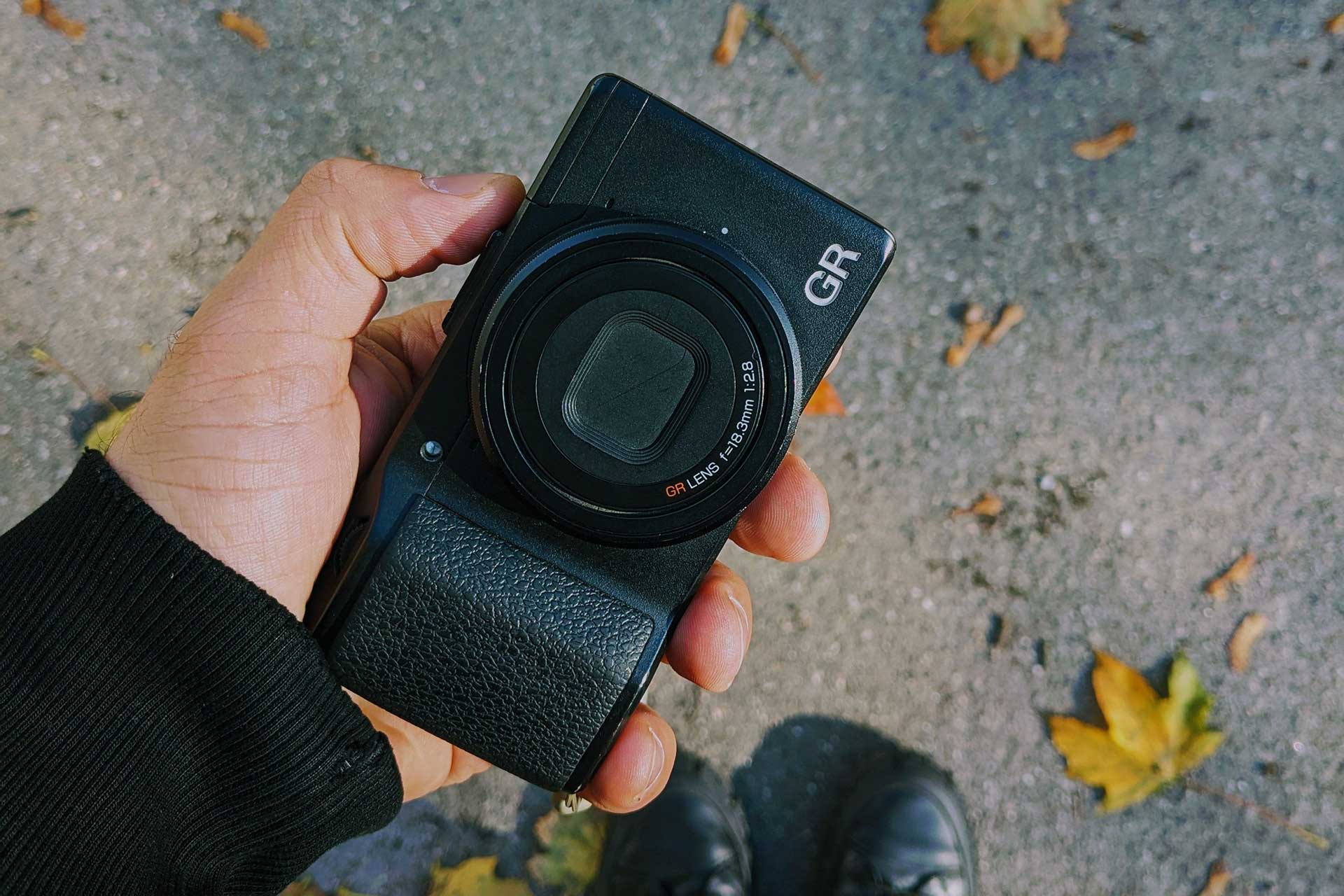
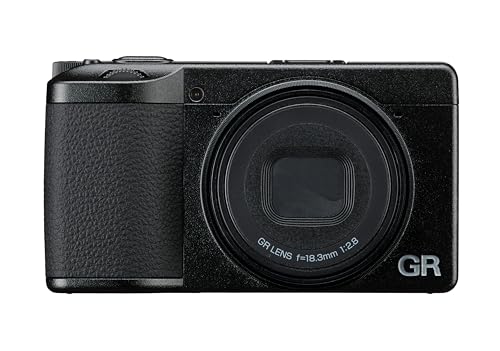
A compact camera is a good choice if you want a small everyday setup. The Ricoh GR IV is built around a fixed 28mm-equivalent lens, making it suitable for wider street scenes, markets, architecture, and environmental portraits. Its pocketable design is a major part of its appeal.
The Fujifilm X100VI offers a 35mm-equivalent fixed lens, a hybrid viewfinder, and Fujifilm film simulations. It suits photographers who enjoy a classic camera layout and want attractive JPEG colour straight out of the camera. The fixed lens keeps the setup simple, but it also means you need to be happy with that field of view.
Interchangeable-Lens Mirrorless Cameras
A mirrorless camera gives you more room to grow. You can start with a small prime lens and add another focal length when your photography calls for it. Fujifilm X-series cameras are worth a look if you enjoy physical controls, film simulations, and compact APS-C lenses. Models such as the X-T50, X-M5, and X-T5 offer different balances of size, controls, and features.
The Sony a6700 is another option if autofocus performance and lens choice are high on your list. The Nikon Zf appeals to photographers who prefer retro-inspired controls and a full-frame system. Before choosing a body, compare the size and cost of the lenses you are likely to use. A small camera paired with a large, heavy lens may not feel like a compact street setup.
Recommended Street Photography Cameras
- Built-in HDF (Highlight Diffusion Filter): Diffuses highlights for softer light, creating more expressive images with a sense of depth and emotion
- Ultra Compact Design: Smallest GR to date, easily fits in your pocket for convenient portability
- Capture timeless moments effortlessly with the FUJIFILM X100VI camera. Featuring a classic dial-based design merged with cutting-edge imaging technology, it offers 1.5x more resolution and double the speed of its predecessor. With an internal 4-stop ND...
- When the light is low, and the stakes are high X100VI ensures photos stay sharp and videos stable thanks to up to 6 stops in-body image stabilization (IBIS) system. Internal gyro sensors minimize the impact of camera shake for those critical moments by...
- Dedicated Film Simulation dial offering fast access to 20 Film Simulations (including REALA ACE mode)
- 40.2-megapixel X-Trans CMOS 5 HR sensor
35mm Film Cameras
A 35mm film camera slows the process down. You have a limited number of frames, need to pay attention to exposure, and must wait for development before seeing the results. That slower rhythm is part of the appeal for many film photographers.
Popular manual-focus options include the Nikon FM2, Canon AE-1, Pentax K1000, and Olympus OM-1. A used camera should be judged by its condition, not just its reputation. Check the shutter at different speeds, film advance, light seals, battery compartment, viewfinder, meter, and lens optics. Ask whether the camera has been serviced and whether the seller offers a return period.
For a closer comparison, read our guide to the best 35mm film cameras for street photography.
2. Street Photography Gear Guide: Choose the Right Focal Length
Lens choice is another key part of choosing your setup. Focal length affects how much of a scene you include and how close you need to stand. There is no single best choice for every photographer, but 28mm, 35mm, and 50mm-equivalent views are useful starting points.
28mm: Include More of the Scene
A 28mm-equivalent lens works well when the surroundings are part of the story. It can include architecture, signs, crowds, and layers of activity in one frame. You may need to move closer to your subject to give the photograph a clear point of interest, so it rewards confident composition and careful attention to the edges of the frame.
35mm: A Flexible Everyday View
A 35mm-equivalent lens gives you a useful balance between the subject and the environment. It is wide enough for everyday street scenes but still works for individual people and documentary-style photographs. On a Fujifilm APS-C camera, a lens around 23mm gives a similar field of view.
50mm: Focus on People and Details
A 50mm-equivalent lens gives you a tighter view. It can help isolate a person, pick out details, and simplify a busy background. The trade-off is that you need more space to frame a wider scene, which can be awkward in narrow streets or crowded markets.
| Equivalent focal length | Good for | What to expect |
|---|---|---|
| 28mm | Markets, architecture, busy streets | More of the environment in the frame |
| 35mm | Everyday street and travel | A flexible balance of subject and setting |
| 50mm | People, details, tighter compositions | A narrower view and more subject separation |
If you shoot with a Fujifilm body, our guide to the best Fujifilm prime lenses for street photography compares compact options for different shooting styles. Choose one focal length, learn how it sees the world, and only add another lens when you can explain what your current one cannot do. This street photography gear guide is built around that simple approach.
Recommended Fujifilm Street Photography Lenses
- Advanced image quality - ten elements in six groups, including two aspherical elements for edge-to-edge sharpness
- Angle of view: 63.4°.At just 180g, the XF23mmF2 R WR is compact, lightweight, and stylish for great operability
- Weather-resistant design with 8 sealing points for weather- and dust-resistance and operation as low as 14 Degree.
- Inner focus system with 0.08 seconds autofocus speed and nearly silent operation. Focal length : 35mm (35mm format equivalent : 53mm)
3. Street Photography Gear Guide: Film Photography Essentials
For photographers who shoot analog, this street photography gear guide also covers the basics beyond the camera. A film camera is only the beginning of an analog setup. You also need film, a reliable way to check exposure, and a plan for development and scanning. Start with the basics rather than buying a collection of accessories before your first roll.
Choose Film for the Light You Shoot In
ISO 100 and ISO 200 films are useful in bright daylight. ISO 400 is a flexible everyday choice for changing outdoor conditions, while ISO 800 and faster stocks can help in lower light. Faster film may show more visible grain, depending on the stock and how it is exposed and developed.
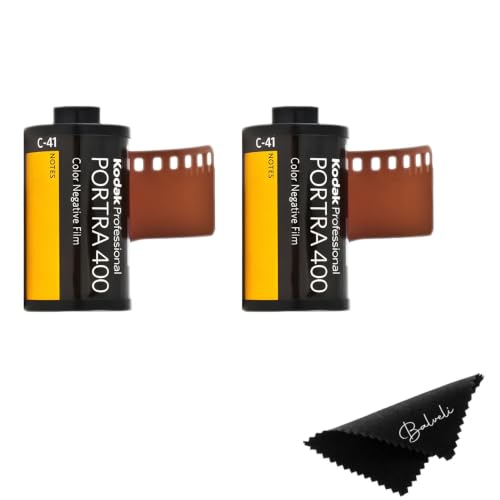
Popular colour options include Kodak Gold 200, Kodak Ultramax 400, and Kodak Portra 400. For black and white, Ilford HP5 Plus is a common all-round option. Your choice comes down to the look you enjoy, the light you usually shoot in, and the cost of replacing each roll.
See our guides to the best film stocks for beginners and 35mm film for street photography for more detailed comparisons.
Check Batteries and the Light Meter
Some mechanical cameras can operate without a battery, while others rely on one for the meter or electronic shutter. Check the battery type before buying a used body and carry a spare if your camera needs one. Test the built-in meter against a trusted meter or another camera rather than assuming an old reading is accurate.
An external meter can help when your camera has no meter or its meter is unreliable. A small shoe-mounted meter keeps the setup compact; a handheld meter can offer more control over how you measure a scene. A phone app can be useful as a rough guide, but do not treat it as a guaranteed reading in difficult light.
For dedicated options, see our guide to shoe-mount light meters for vintage film cameras.
Film Photography Essentials
- Exceptional Color And Tonal Range: Kodak Portra 400 35mm Film Offers Stunning Color Accuracy With Vibrant Yet Natural Tones, Ideal For Portraits And Landscapes. Its 400 Iso Speed Captures Detail Even In Challenging Lighting, Perfect For Everyday And...
- + Wide Exposure Latitude, Medium Contrast
- + Responds Well to Push Processing
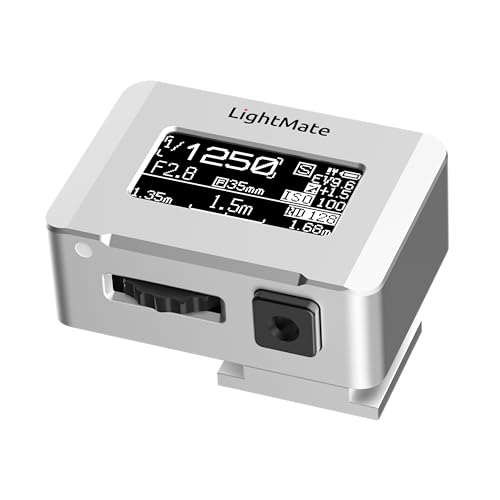
- 0.96 inch Large OLED Screen, 2 types of face. Comprehensive battery life exceeds 20 hours, and it can stand by for more than 6 months when fully charged and turned off. It has a built-in rechargeable battery and can be charged using USB-C cable.And you...
- You can switch between aperture priority and shutter priority modes. Single trigger metering mode, automatic trigger metering mode, and average metering mode. It’s 30 degree metering lens can meet the vast majority of usage scenarios.
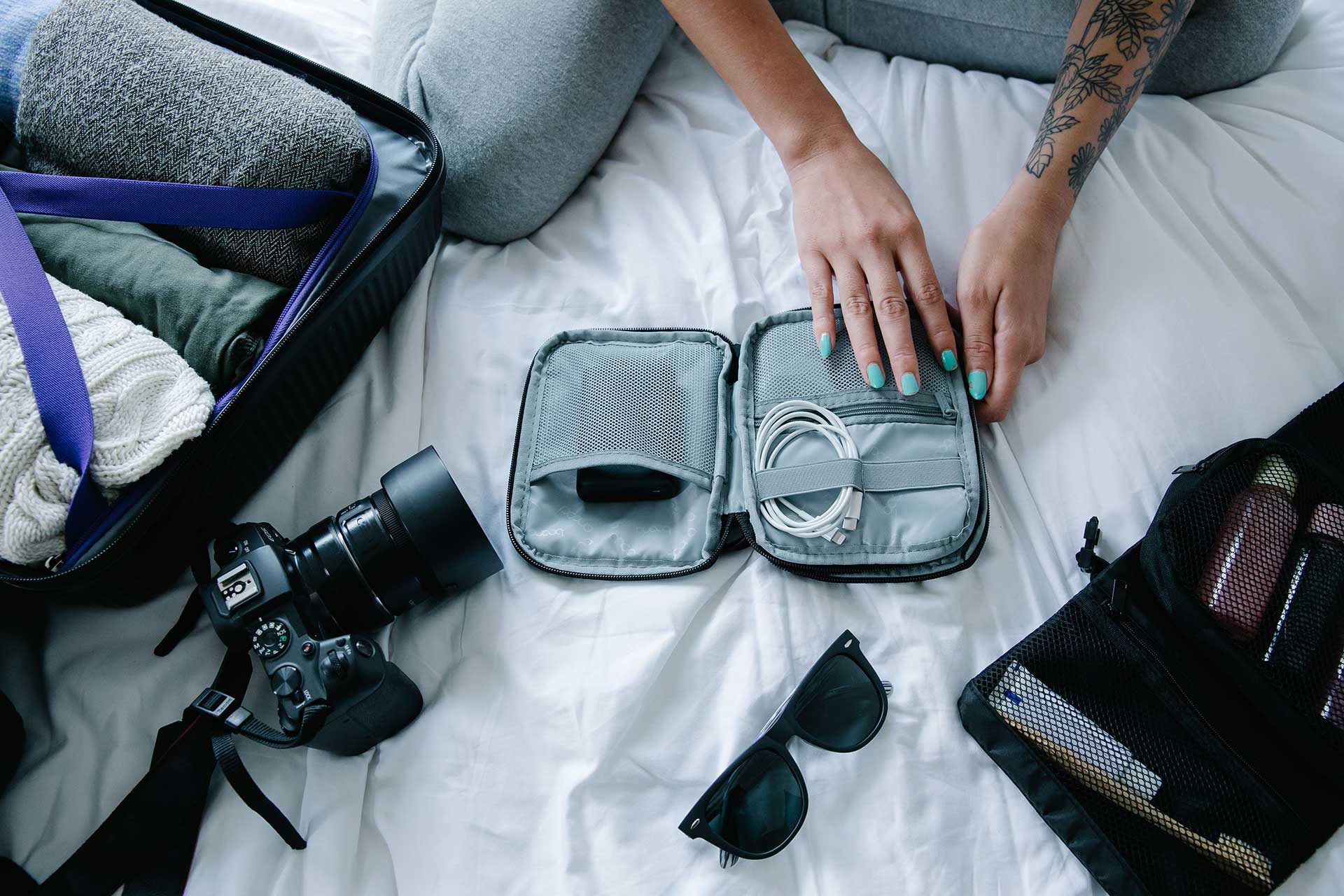
Store Film Properly
Heat and humidity can affect film, especially during long storage. Keep unused rolls in a cool, dry place away from direct sunlight and hot cars. Refrigeration can help when storing film for longer periods; keep rolls sealed and let them return to room temperature before opening the packaging to reduce condensation. Follow the film maker’s storage advice for the specific stock.
After shooting, label exposed rolls and keep them protected until you send them for development. If you live in a hot and humid climate, avoid leaving film in a camera bag inside a parked car.
4. Keep Your Everyday Carry Small

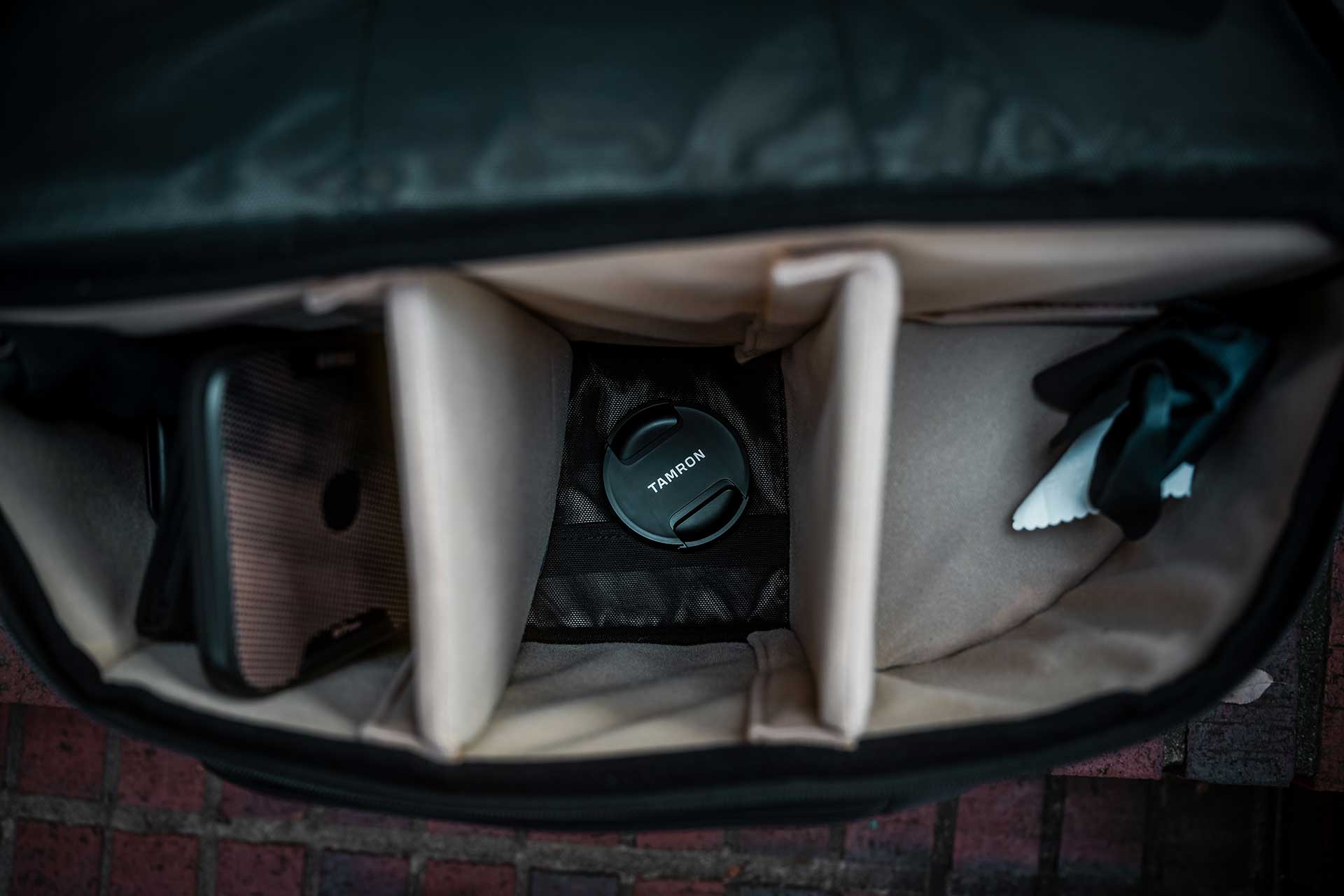
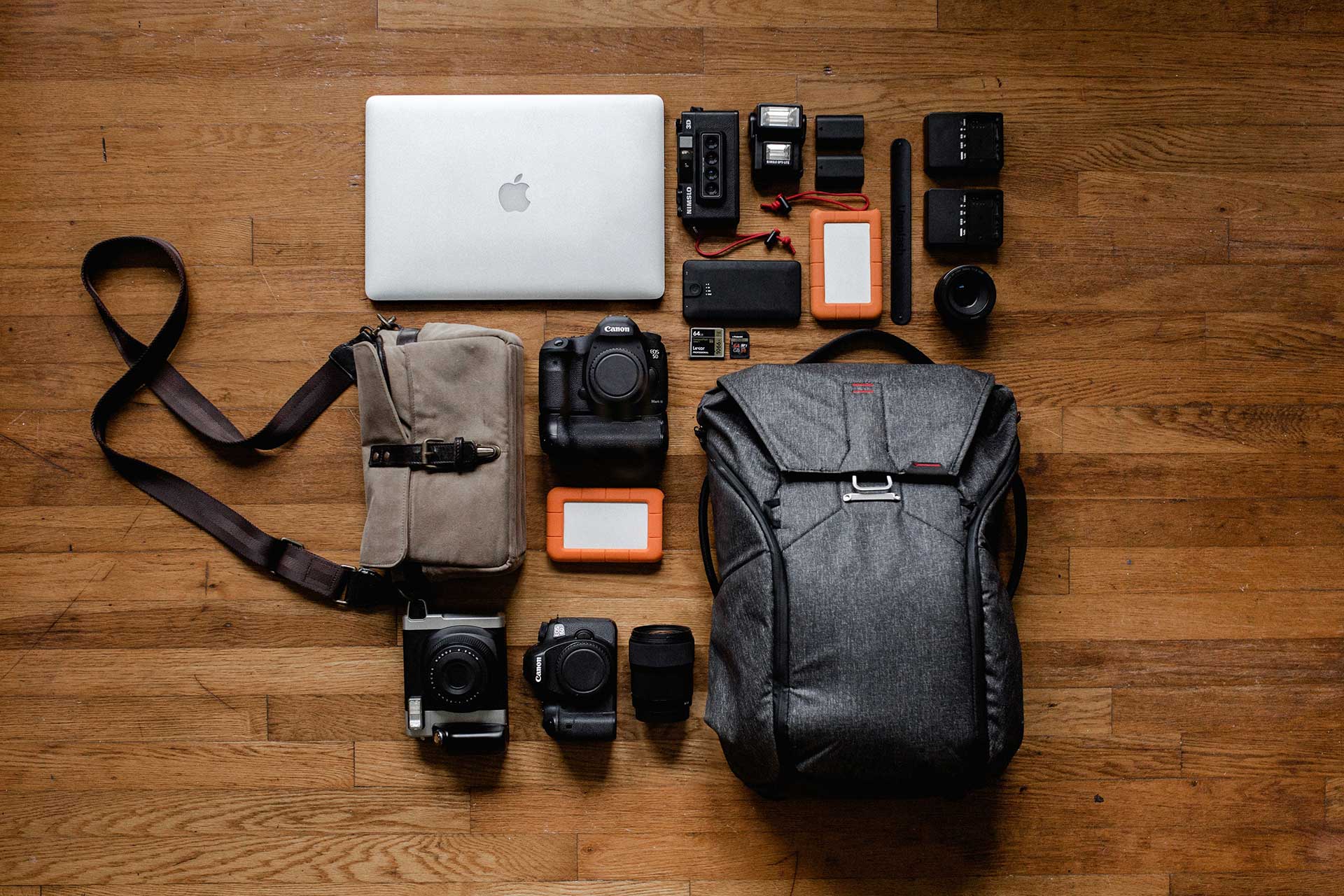
A camera bag should protect your equipment and make it easy to reach your camera. For a compact camera or a small mirrorless body with one or two prime lenses, a 2L to 4L sling may be enough. If you carry a second body, several lenses, or film accessories, look for a little more room without making the bag uncomfortable.
Check strap comfort, zipper quality, padding, weather protection, and how quickly you can take the camera out. A bag with too many compartments can be just as frustrating as one with too few. Our guide to the best camera bags for photography covers options for different setups.
For a simple street photography kit, the everyday essentials are usually:
- A spare battery and an extra memory card for a digital camera.
- A few rolls of film and a spare battery for a film camera, if required.
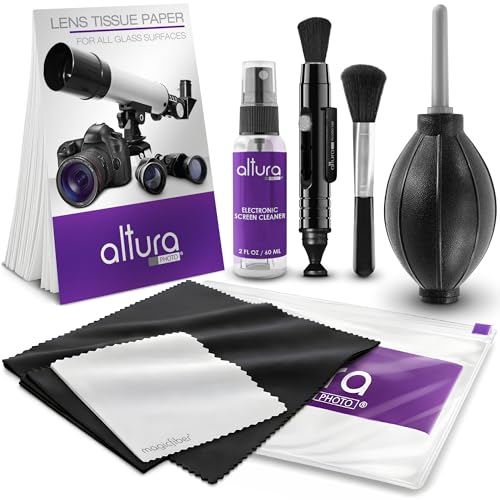
- A microfiber cloth and a small blower for basic lens care.
- A comfortable strap and a weather-resistant bag.
- A phone for maps, notes, and checking the weather.
Do not pack every accessory just because it fits. A lighter bag makes long walks easier and helps you react quickly when a moment appears. The best choices in this street photography gear guide are the ones you will actually carry and use.
Useful Everyday Camera Accessories
- PERFECT BAG DIMENSION: External Size is 13×8.6×5.9 inch,Internal Size is 10.6×6.7×4.1 inch. The adjustable shoulder strap varied from 34.25 to maximum 55.1 inch can be adjusted personal preference. Simple design with double color, fashionable and...
- MULTI-PURPOSE: 1 included flexfold dividers give brilliantly customizable and protective internal organization while allowing maximal use of the available space. 10mm high-density EPE shock-proof cotton, effectively protects equipment in all directions...
- COMPLETE CAMERA CLEANING KIT: Our camera lens cleaning kit includes an alcohol & ammonia-free lens cleaner spray, cleaning brush, lens pen, air blower, MagicFiber microfiber cloths (3), and lens tissue paper wipes (50). Most competing lens cleaning kits...
- SAFE LENS CLEANER SPRAY: Our lens cleaning solution is alcohol-free, ammonia-free, and odor-free. Formulated to safely remove dust, fingerprints, and smudges from anti-reflective coatings and multi-coated glass. Professional MagicFiber microfiber cleaning...
5. Which Accessories Are Actually Worth Carrying?

Accessories should solve a problem you regularly encounter. For most daytime street photography, a camera and lens are enough. The items below are useful in specific situations, but they are not compulsory purchases.
Flash
A small hot-shoe flash can help with night photography or a direct-flash look. Check manual power control, recycle time, battery type, and compatibility with your camera. Film users should also check the camera’s flash sync speed before shooting. Keep flash optional unless you know you enjoy working with it.
Filters
A circular polarizer can reduce reflections from glass and water, while a neutral-density filter can help with long exposures in bright daylight. Both reduce the light reaching the sensor or film, so they are not always useful for handheld street photography. Check your lens filter thread before buying, and consider a step-up ring if you want to share one filter between lenses.
Tripod
A tripod is useful for long exposures, night scenes, architecture, and self-portraits. It is rarely needed for ordinary street shooting. If you plan to carry one, choose a compact model with enough load capacity for your camera and lens. Our guide to compact travel tripods that fit in a camera sling bag can help you compare smaller options.
Film Scanning
After development, you can ask a lab to scan your negatives, use a dedicated film scanner, or digitise them with a digital camera, macro lens, copy stand, and suitable light source. A lab is often the simplest choice if you shoot only a few rolls. Home scanning makes more sense when you shoot regularly and want more control over the files.
Dedicated scanners are designed around film workflows, while flatbed scanners can handle prints and documents as well. Camera scanning can be fast once the setup is aligned and calibrated, but it takes time to get consistent focus, lighting, and colour inversion. Read our guide to 35mm film scanners for home use for a deeper comparison.
6. Street Photography Gear Guide: Three Kits for Different Budgets

Use this street photography gear guide to choose a kit that fits your budget and shooting habits. You do not need to buy everything in this guide. Build your kit around how often you shoot, whether you prefer digital or film, and how much weight you want to carry. The figures below are broad planning estimates in US dollars, not live retailer prices. Used condition, local availability, film prices, and lab fees can change the final cost.
Shop the Three Street Photography Kits
BEGINNER KIT: Used 35mm film camera, standard lens, film rolls and basic bag. [INSERT PRODUCT LINKS]
ENTHUSIAST KIT: APS-C mirrorless camera, compact prime lens, spare battery and sling bag. [INSERT PRODUCT LINKS]
MINIMALIST KIT: Pocketable compact camera, spare battery, memory card and small sling. [INSERT PRODUCT LINKS]
Beginner Kit: $300–$600
For a beginner, a well-maintained second-hand 35mm SLR with a standard lens can be a good way to learn exposure and composition. Add a few rolls of ISO 400 film, a basic strap or bag, a spare battery if needed, and money for development and scanning. If you prefer digital, look for a used compact camera or an older mirrorless body with a small kit lens.
| Item | Planning budget |
|---|---|
| Used 35mm camera and lens | $150–$300 |
| Film rolls | $40–$70 |
| Bag and strap | $30–$60 |
| Cleaning kit and spare battery | $20–$40 |
| Development and scanning allowance | $60–$130 |
Best for: Learning manual exposure, composition, and the film process without committing to an expensive camera system.
Enthusiast Kit: $1,200–$2,000
An enthusiast kit can centre on an APS-C mirrorless camera with a fast 23mm or 35mm prime lens. This gives you a flexible digital setup for street and travel photography. If you enjoy analog photography, add an affordable film body rather than buying several digital lenses at once. A compact sling, spare batteries, memory cards, and a small cleaning kit round things out.
Best for: Regular photo walks, travel, documentary projects, and photographers who want both digital and film options.
Minimalist Everyday Carry Kit: $800–$1,500
This kit is about keeping the load light. Choose one camera and one lens, then carry only a spare battery, memory card, microfiber cloth, and small sling. A pocketable fixed-lens camera such as the Ricoh GR IV keeps the setup compact. A Fujifilm X-series body with a small prime is another option if you want interchangeable lenses and film simulations.
For an analog version, use a compact 35mm body with one small prime lens and a couple of rolls of film. Leave the flash, tripod, and extra lenses at home unless the shoot calls for them.
Best for: Everyday carry, spontaneous photo walks, urban exploration, and photographers who prefer to travel light.
7. How Much Should You Spend on Street Photography Gear?
Set a total budget before choosing a camera. It is easy to spend most of your money on a body and forget the cost of lenses, batteries, film, development, scanning, repairs, and storage. With film photography, the ongoing cost of each roll matters just as much as the initial camera purchase.
Start with the camera and lens combination you are comfortable carrying. If you shoot film with a camera that has no working meter, an external meter may solve a real problem. If you mostly shoot digital in daylight, you may not need one at all. The same applies to scanners: buy one when your shooting volume makes home scanning worthwhile, not simply because it is another piece of gear to own.
Before spending more, use this street photography gear guide to ask yourself three questions: What limitation am I trying to solve? How often do I encounter it? Is there a cheaper or simpler way to fix it? If you cannot answer those questions, keep using your current setup.
Street Photography Gear Guide: What to Buy First
If you are building a street photography kit from scratch, this street photography gear guide recommends buying in the following order:
- Camera: Choose a body that feels comfortable and is in good working condition.
- Lens: Start with one focal length that suits the way you frame a scene.
- Carry system: Get a comfortable strap or small bag that protects your camera.
- Basic care: Add a microfiber cloth, blower, spare battery, and memory card where needed.
- Film essentials: If you shoot analog, budget for film, development, and scanning before buying optional accessories.
- Specialist tools: Add a flash, filter, tripod, external meter, or scanner only when your photography gives you a clear reason.
This buying order keeps the focus on equipment that affects your photographs and your time outdoors. It also makes it easier to spot which accessories you actually use.
Frequently Asked Questions
What is the best camera for street photography in 2026?
It depends on your preferred size, lens, and budget. The Ricoh GR IV is a compact option with a 28mm-equivalent lens. The Fujifilm X100VI has a 35mm-equivalent lens and hybrid viewfinder, while an interchangeable-lens camera such as the Fujifilm X-T50 gives you more flexibility.
Is 28mm or 35mm better for street photography?
A 28mm-equivalent lens includes more of the surroundings and works well for busy scenes. A 35mm-equivalent lens gives you a balanced view that suits many everyday situations. Choose the one that feels natural when you compose photographs.
What is the best film camera for beginners?
A properly working Canon AE-1, Pentax K1000, Nikon FM2, or Olympus OM-1 can be a good starting point. Check the shutter, meter, light seals, battery compartment, lens, and availability of repairs before buying.
What do I need for an analog film photography starter kit?
Start with a 35mm camera, a compatible lens, a few rolls of film, and spare batteries if required. You will also need access to a lab for development and scanning, or a suitable home scanning setup.
Do I need an external light meter for film photography?
No, not if your camera has a working and accurate built-in meter. An external meter is useful when the camera has no meter, the built-in meter is unreliable, or you want more control over exposure.
Is a film scanner worth buying?
It can be worth buying if you shoot film regularly and want control over digitising your negatives. If you only shoot a few rolls a year, paying a lab to scan them may be more practical.
How should I store 35mm film in a hot and humid climate?
Keep film sealed in a cool, dry place away from heat and direct sunlight. For longer storage, refrigeration can help. Let sealed rolls return to room temperature before opening to reduce condensation.
Do I need a tripod for street photography?
No. Most street photography is handheld. A compact tripod is useful for long exposures, night scenes, and static architectural photographs, but it is an optional extra.
Final Thoughts: Build a Kit That Gets You Shooting
The best street photography setup is the one you enjoy carrying. It might be a pocketable digital camera, a Fujifilm mirrorless body with a small prime, or a mechanical 35mm camera loaded with your favourite film. Each approach has its own feel, and none requires a bag full of accessories.
Start with a camera and lens that suit your style. Add the practical essentials, learn how your equipment behaves, and spend more time walking, observing, and making photographs. When a genuine limitation appears, you will know which piece of gear is worth adding.
Use this street photography gear guide as a starting point, not a shopping list. A simple kit that goes everywhere with you is often more useful than an expensive setup that stays at home.
Disclosure: This article contains affiliate links. ShutterGroove may earn a commission when you purchase through qualifying links, at no additional cost to you.