I have been looking for a budget GPU for quite some time and finally decided to get the GeForce RTX™ 3050 VENTUS 2X 6G OC despite all the mixed opinions online. After spending weeks reading reviews, watching other reviewer’s game benchmarks, and watching way too many YouTube videos, I ended up giving up my GeForce Now subscription and buying a real graphics card instead.
Honestly, GeForce Now was pretty decent for casual gaming. I subscribed to it for around six months mainly because GPU prices were still painful at the time, and I just wanted to play games without stressing my old setup too much. But after a while, I started thinking, if I’m already paying every month just to stream games, why not save that money and put it toward an actual GPU for my PC?
That thought stayed in my head for weeks, especially while playing Where Winds Meet. I wanted smoother gameplay, lower latency, better image quality, and the freedom to play without relying on internet stability. Cloud gaming works, but it still doesn’t fully replace the feeling of running a game directly on your own hardware.
RTX 3050 6GB Specs and Real-World Feel
The MSI GeForce RTX™ 3050 VENTUS 2X 6G OC is built on the NVIDIA Ampere architecture, bringing dedicated Ray Tracing Cores, AI Tensor Cores, and high-speed G6 memory. It sits in the budget tier, but still carries modern features like DLSS and basic ray tracing support, which helps it stay relevant for 1080p gaming in 2026.
It comes with a boost clock of 1492 MHz and 14 Gbps memory speed, paired with 6GB GDDR6 VRAM. For display output, it includes DisplayPort x 1 (v1.4a) and HDMI x 2 with support for 4K at 120Hz as specified in HDMI 2.1. The dual fan thermal design with a large heatsink keeps things cool and quiet, which really shows during long gaming sessions where temperatures stay controlled and fan noise stays low.
On the software side, MSI Center allows real-time monitoring and quick tweaking, while Afterburner adds more control with OC Scanner for automatic stable overclocking, On-Screen Display for live performance stats, and Predator for in-game recording. These tools make the card feel more flexible even if you do not manually tune anything.
Why I Still Chose the GeForce RTX 3050 VENTUS 2X 6G OC
So I started searching for affordable GPUs again.
The GeForce RTX 3050 VENTUS 2X 6G OC kept appearing everywhere, but the comments were brutal. Some people called it weak. Some said it was “not worth it.” Others compared it to older cards and made it sound terrible. At first, all those opinions almost pushed me away from buying it.
But after digging deeper, I realized something important.
A lot of people online were comparing the RTX 3050 to more expensive GPUs instead of judging it for what it actually is, a budget graphics card meant for 1080p gaming.
If you are still comparing options before buying, you can also check my guide on the best-selling NVIDIA GeForce RTX GPUs to see how the RTX 3050 compares against newer and more powerful models.
The RTX 3050 6 GB Is Different
The GeForce RTX 3050 VENTUS 2X 6G OC is also quite different from the original RTX 3050 launched back in January 2022. The older 8 GB version arrived during one of the worst GPU shortages ever, when crypto mining and pandemic supply issues completely messed up the market. Back then, even mid-range GPUs were ridiculously overpriced.
The original RTX 3050 8 GB was actually a pretty capable 1080p gaming card. NVIDIA first built it using the GA106 chip, which was related to the RTX 3060, before later moving to the smaller GA107 silicon with nearly identical specs. The newer revisions even became more power efficient with lower gaming power consumption.
That part caught my attention because power usage mattered to me.
Best Budget Gaming Performance in 2026
And after using it myself?
I genuinely think the RTX 3050 gets more hate than it deserves.
No, this is not a 4K ultra settings monster. Nobody should expect that from a budget GPU. But for 1080p gaming in 2026, especially for games like Where Winds Meet, it still performs pretty well if you manage your settings properly.
I was able to enjoy stable gameplay, good image quality, and smooth performance without constantly worrying about temperatures or power consumption. DLSS also helps a lot in supported games, giving extra FPS without making everything look terrible.
Where Winds Meet Performance Test

I installed the Where Winds Meet Lite version client, which took around 68GB instead of the standard 110GB. That smaller install size actually helped a lot on my system since SSD storage space is always tight on a budget build. This Lite version worked better for my PC spec, but I still ran into a memory error at first. After that, I simply unchecked the DX11 option and adjusted a few Nvidia App settings as well as in-game settings, and things started running smoothly.
For my Where Winds Meet test, I was honestly surprised by how stable the GeForce RTX 3050 VENTUS 2X 6G OC performed during long gaming sessions.
I used DLSS Quality with Super Resolution Type enabled, while keeping the overall graphics quality on High settings. During gameplay, the GPU was sitting at around 99% usage most of the time, which is exactly what I want since it shows the card is being properly pushed without bottleneck confusion or wasted headroom.



Power draw stayed around 68W during gaming, which really stood out to me. The card runs cool, quiet, and does not heat up the whole room. For a budget gaming setup or someone upgrading from older hardware, this low power usage makes things much easier, especially if you are not planning to upgrade your PSU right away.
Temperature stayed between 58°C to 62°C, which felt very comfortable during extended play sessions. Even better, fan speed stayed around 1300 RPM, so the system stayed quiet and never became distracting while playing.
With the NVIDIA App auto-tuning feature enabled, the whole experience felt smooth and stable without needing manual overclock tweaks. Everything just worked straight out of the box, which I honestly did not expect from a budget GPU setup.
Pairing the GeForce RTX 3050 with my AMD Ryzen 5 2600 also worked better than expected. Even with an older processor, the game still felt responsive and enjoyable at 1080p, especially after tuning a few settings and using DLSS.
NVIDIA App Auto-Tuning Made Things Easier
One thing that genuinely surprised me was how easy NVIDIA made the whole experience with the NVIDIA App. I used the built-in Performance Auto-Tuning feature and just let the software handle the overclock settings automatically.
Honestly, for someone like me who does not want to spend hours manually tweaking voltages, clocks, and fan curves, this was perfect.
The app tested the GPU, applied a stable overclock, and everything has been running smoothly ever since. My games feel stable, temperatures stay reasonable, and I did not need to deal with random crashes or complicated tuning guides from Reddit and YouTube.
I also made sure my RAM and CPU were running properly, even though I am only using an AMD Ryzen 5 2600 processor. Surprisingly, the combination still works really well for 1080p gaming.
That is why I honestly do not fully understand why so many people online keep saying the GeForce RTX 3050 is a “bad GPU.”
Maybe the expectations are the problem.
A lot of discussions online compare the RTX 3050 against GPUs that cost much more money. Of course it will lose against stronger cards. But that does not automatically make it bad.
For people like me who simply want smooth gaming, decent temperatures, low power consumption, DLSS support, and an affordable upgrade, the RTX 3050 actually delivers exactly what it promises.
I think many gamers forget that not everybody is chasing ultra settings at 4K resolution with 200 FPS. Some of us just want a stable and enjoyable gaming experience without spending a fortune.
And honestly? That is exactly what I got with the GeForce RTX 3050.
The Biggest Factor Is the Price
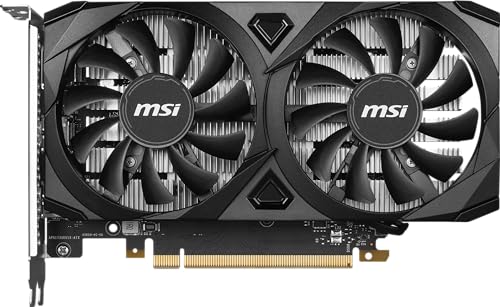
- Chipset: GeForce RTX 3050
- Boost Clock / Memory: 1492 MHz / 14 Gbps

The biggest reason why I feel the GeForce RTX™ 3050 Ventus 2X 6G OC still makes sense comes down to pricing.
I got mine at an affordable price, and that completely changed the value equation. If you buy this card expecting high-end RTX 5070 performance, you’ll obviously feel disappointed. But if you buy it knowing you just need a reliable 1080p GPU for esports titles, MMORPGs, open-world games, and daily gaming, it actually makes sense.
A lot of online discussions especially on Reddit forget one simple thing: not everyone wants to spend huge money on a graphics card.
Some people just want a GPU that works well, stays power efficient, supports modern NVIDIA features, and can run games comfortably without destroying their wallet. That’s exactly where the RTX 3050 fits in.
Final Thoughts
Would I recommend it in 2026?
If you can get it cheap, yes.
Especially if you are upgrading from older GTX cards, using integrated graphics, or moving away from cloud gaming services like GeForce Now. The experience of having your own dedicated GPU still feels much better for long gaming sessions.
The GeForce RTX 3050 VENTUS 2X 6G OC may not be the most powerful GPU in 2026, but after using it myself, I honestly think it’s still one of the better budget choices for casual 1080p gaming.